
Bloomfield Neighbors by Block
Public records describe a block in pieces. Map geometry identifies the parcels around an address. PROS ties a parcel to tax-record fields, and PRESS supplies recorded transfer information. Library directories and census work add historical context. A voter record is a regulated election record, not a streetwide household list. Read each result for what it actually establishes before connecting it to Bloomfield neighbors.
| Source | What It Shows About a Block | Access |
|---|---|---|
| Bloomfield Digital Map or tax-map sheet | Parcel geometry, block and lot reference, roads, and adjacent shapes | Township-linked map; official sheet fallback |
| Essex County PROS | Owner, situs, mailing clue, SBL, and assessment fields for one parcel | Public property search |
| Essex Register PRESS | Recorded grantor, grantee, date, and legal-description clues | Later online records; books in Newark |
| New Jersey voter records | Statutory public list fields subject to exclusions and request rules | Status route and county election request |
| Library historical collections | Past street and household references, newspapers, and yearbooks | Library and archival access |
An adjacent owner is not necessarily an occupant, and one street number can stand for several units or a larger tract. The record trail can identify parcels and recorded parties without becoming a private roster.
Map Bloomfield Neighbor Parcels
The Township links its Digital Map, but the local SDL interface had a live-render gap during research. When it loads, locate the target parcel and browse the immediately touching geometry. If the parcel-click details or adjacency tools do not render, use the official Bloomfield tax-map index and sheets. The sheets are illustrations and expressly not to scale, so they are a bridge to the parcel key rather than final proof of dimensions.
Process: target situs address → map geometry or tax-map sheet → visible block/lot, SBL, or PIN → one PROS parcel search at a time → recorded deed only when a transfer question remains.
- Locate the target address and save its displayed parcel identifier.
- Mark only polygons that directly touch it, then note a map-sheet reference and situs address.
- Return each identifier to Essex County PROS for its tax-record result.
- Keep adjacent parcel, same building, and same mailing address as separate categories.
For a full named-street chain instead of the immediate block, use the Bloomfield street directory. That address workflow has a broader scope than a parcel-by-parcel neighbor check.
Bloomfield Map Record Fallbacks
The most reliable fallback for a blank map is a tax-map sheet followed by PROS. The Township lists an index and sheets 01 and 03 through 34. From the sheet, use the target geometry and the displayed block and lot to run a narrow PROS search. Do not assert that the local map has a buffer, radius, or neighbor button when those controls were not verified in the accessible render.
The official tax-map page is the relevant source for that fallback. It provides a stable point of reference when the live map does not expose parcel detail.
NJGIN parcel data is searchable by address, county, municipality, block, and lot, with the PIN matching the PAMS identifier. State-hosted owner names can be redacted under Daniel’s Law, another reason to return a parcel key to the local PROS record and PRESS rather than treating a map label as final.
Bloomfield Neighbor Record Limits
PROS can show owner name, mailing address, situs address, SBL, assessment, lot size, and related property fields. The mailing address may be outside Bloomfield and is only a tax-correspondence clue. A current owner does not identify all people at a parcel. Guests, other household members, utility customers, and delivery customers are not made into a normal public block resource by the tax roll.
Use an owner field to begin an official property search, then retain the source date. A parcel polygon is a spatial record, a PROS row is a tax record, and a deed is a recorded instrument. Joining them can clarify a particular parcel, but it cannot prove that someone was continuously present.
Note: A multi-unit building or a large tract can put several distinct records behind one displayed street number.
Bloomfield Neighbor Voter Rules
New Jersey’s voter-list statute, N.J.S.A. 19:31-18, describes public list fields that include name, address, date of birth, party affiliation, and voting history, while excluding signatures and protecting covered-person home addresses. A status match does not disclose a ballot choice or show every person at an address. The official status form had no verified rendered field list during research, so it should not be treated as a block-search tool.
N.J.S.A. 19:31-18.1 governs copies: a printed list can be requested at $0.25 per copy per election district, and an electronic list from a Commissioner of Registration can cost no more than $375. The law bars commercial or charitable solicitation use. Ask the Essex election office for the current product, data date, permitted-use certification, and protected-record treatment before requesting a list. Read the official voter-registration statutes for the controlling provisions.
Bloomfield Neighbor Deed Context
When a parcel has changed hands, PRESS can add parties, recording date, document type, book/page or document number, and a legal-description clue. Search a current owner as grantee to identify a purchase deed, then search the earlier grantor as a grantee if the question is historical ownership. Confirm the municipality and legal description rather than relying on a similar name or address.
The Essex Register’s public room in Newark remains important for older books and records that do not have a usable online image. A mortgage cancellation before July 2, 2012 may appear in the index without an electronic image. That is why a recorded placement key is more useful than assuming a visible result row resolves the question.
Bloomfield Neighbors: Source Comparison
Official records are preferable when a fact must be checked because they expose the custodian, date, record type, and scope. Commercial compiled neighbor tools can combine older addresses and public filings, but may be stale or merge people with similar names. Neither category creates a complete household roster.
| Official original record | Commercial compiled tool | Practical check |
|---|---|---|
| Parcel, deed, voter, or library source with a defined keeper | Combined data from different times and sources | Return to the original custodian and preserve its date |
| Explains what a particular record field means | May omit source timing or blend similar names | Do not turn an apparent match into a claim about a living person |
For a historical question, preserve the directory year, image or page, and collection name. For a current property question, preserve the PROS result date and the recorded document placement. That source trail can be checked again when a portal updates or a name proves ambiguous.
Bloomfield Neighbors in Halcyon Park
Halcyon Park is a useful named neighborhood layer, not a model for every part of Bloomfield. Its association describes a south-end planned community with early-twentieth-century development, lakes, a clubhouse, tennis, and stables. Its history notes 1995 National Register eligibility. The association publishes officers, contact information, activities, neighborhood-watch and beautification material, plus a newsletter archive.
Halcyon Park Neighborhood Association provides that public civic context while not publishing a member roster.
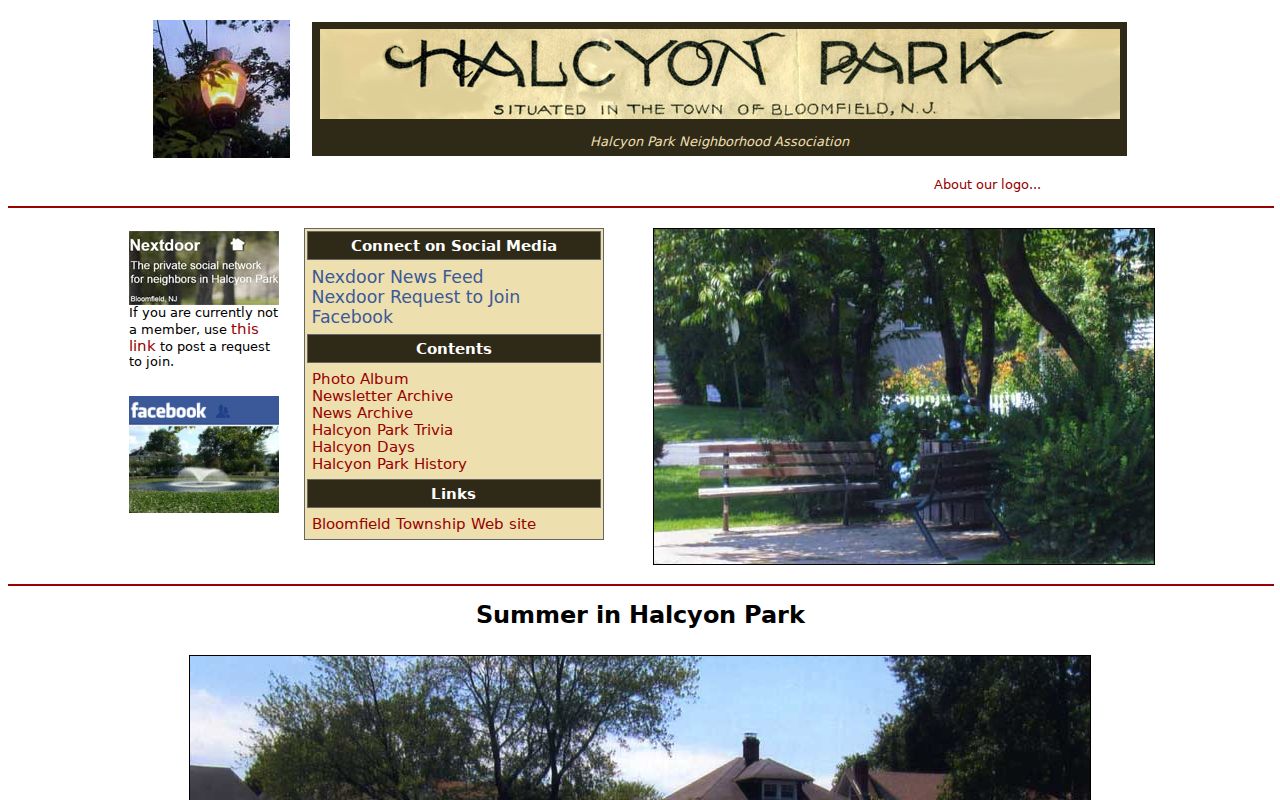
The association’s history and contact layer can help explain place and local activity without identifying private households.
Bloomfield Neighbor Civic Contacts
Public civic information is different from a household list. Township boards and commissions publish appointed public members, agendas, and minutes. The Historic Preservation Commission and Morris Canal Greenway Committee can be useful when a public meeting record identifies a building, district, or project, but a meeting mention does not establish ownership or where a person lives. Community Policing provides program information and Neighborhood Watch contact guidance, not a participant roster.
Township boards and commissions
The official boards and commissions directory supplies public civic roles, meeting access, and official contacts.
Community Policing
Bloomfield Community Policing explains Neighborhood Watch and public safety program contacts.
Halcyon Park
The association offers history, officers, activities, and newsletter access without a private member list.
The official boards and commissions directory is the source for the public-civic layer.
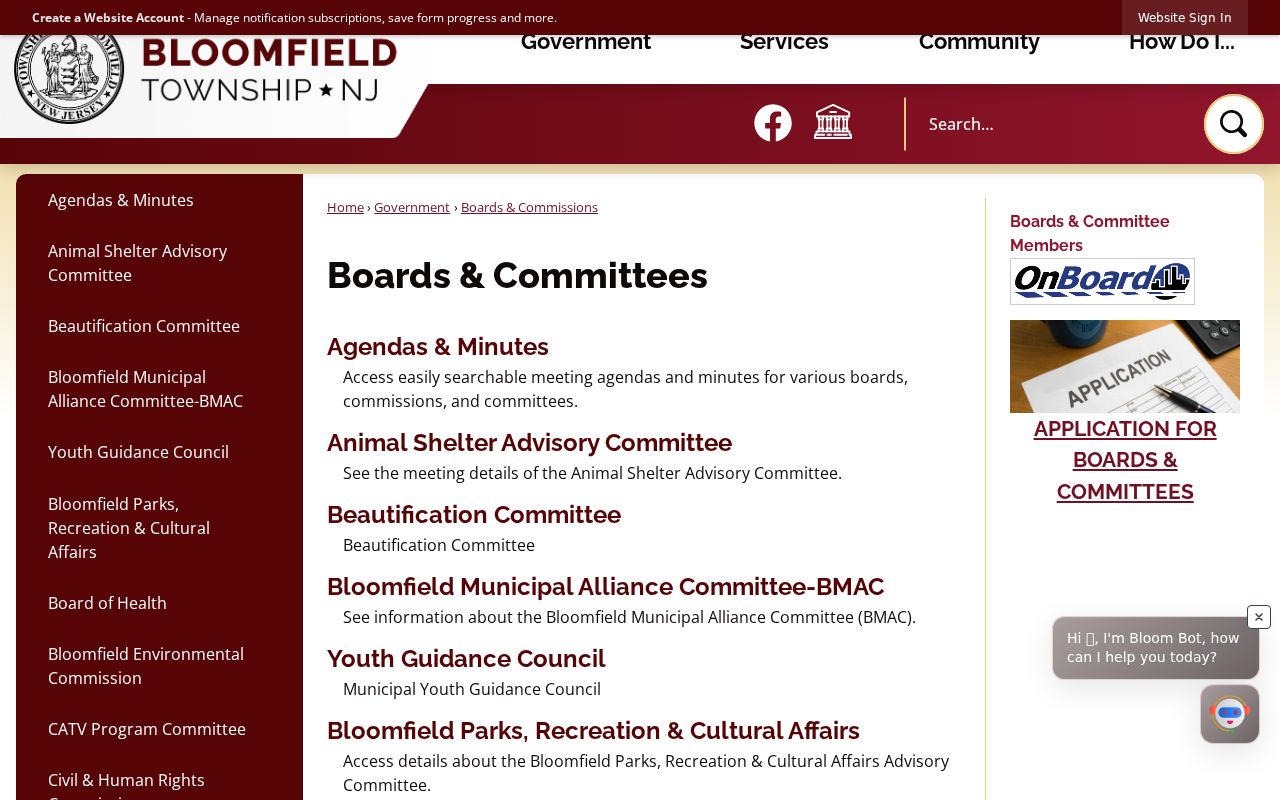
The civic directory identifies public bodies and appointed roles, not the people connected with every nearby address.
The Community Policing resource is the source for the program-information layer.
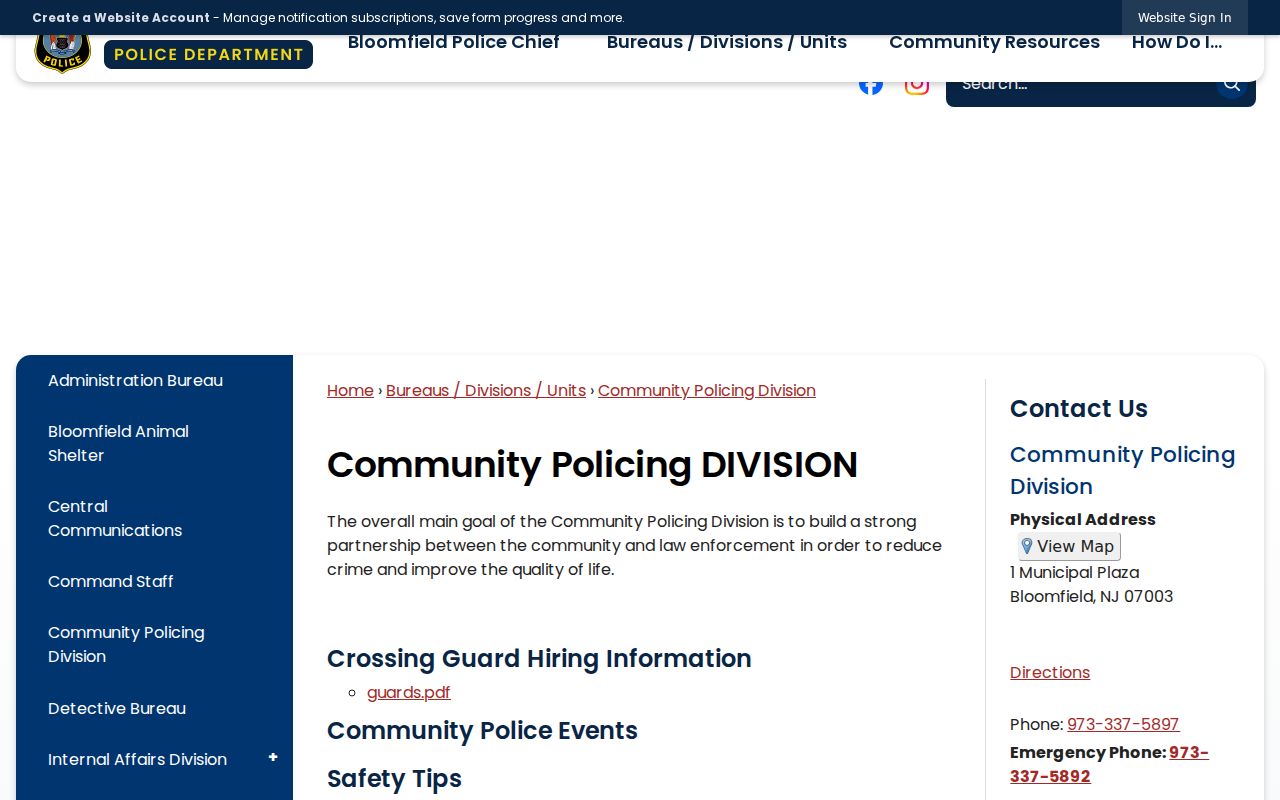
Program information can support a civic connection without converting a watch program into a searchable resident roster.
Bloomfield Historical Neighbor Records
For a past block, use library historical sources after the parcel work. Bloomfield’s local directory collection spans 1870-1970 and is mostly Bloomfield sections of the Orange Directory, held in print and digitized in part. Street sections, where present, can place historical households along an address line. Pair a directory year with the closest released federal census schedule, then consult newspapers or the obituary index for movement or death clues.
The library also offers Ancestry Library Edition in the building, FamilySearch Affiliate access for some records, and remote HeritageQuest access with a Bloomfield card. Historical Society collections include deeds, maps, newspapers, photographs, and clippings. These are historical research channels, not current block lists.
Read the directory’s abbreviation key before treating a line as an address match. The 1870 Orange Directory has alphabetical, street, and business sections, and its printed marks distinguish a house from boarding. Preserve the printed year, page, street form, and spelling. That makes a later census or obituary comparison reproducible and prevents one old line from becoming an unsupported present-day statement about Bloomfield neighbors.
Bloomfield Neighbor Privacy Limits
Some absences are intentional. The New Jersey Address Confidentiality Program provides a legal substitute address for eligible people, and Daniel’s Law and the Office of Information Privacy can suppress home-address display for covered people. The MVC does not disclose personal motor-vehicle information without the proper process. Voter information also has protected-address and request-use rules. A missing address may be a lawful protection rather than a data error.
For a municipal item that is not online, request an existing record from the proper custodian with an exact address, date window, and record type. The Township’s written OPRA form is the local route for eligible municipal records; it does not turn private household information into public data.
Lawful use. Bloomfield neighbor research can support civic curiosity, family connections, and property questions. Do not use public information to watch, harass, intimidate, or harm anyone.