
Finding Bloomfield Residents Through Records
Bloomfield is legally a Township, although the directory title uses the familiar place name. That distinction matters at the counter. Township staff keep the local assessor, vital-statistics, municipal-court, and municipal-record routes, while Essex County offices in Newark keep the recorded-property and county election routes. The most useful starting point depends on the question. An exact address points first to a tax parcel. A name with an approximate date may fit a court index or a recorded document. A grandparent or former classmate calls for the library shelves, census tools, yearbooks, and obituaries instead of a current portal.
Use each result as one dated observation. An assessor row can identify the tax owner, but it cannot establish every occupant. A voter-status match is not a street roster or a ballot record. A deed gives transfer parties and a legal description, while an old directory gives a printed household clue. Matching at least two independent records, and saving the source date, is safer than relying on a single name hit.
- Enter a known address or owner name in Essex PROS and save the situs address, mailing address, and parcel or SBL identifier.
- Use the New Jersey voter-status route as a person-by-person confirmation, recognizing that protected addresses and the live form’s exact fields limit what appears.
- Search the Essex Register index in both grantor and grantee directions for a transfer tied to the parcel.
- Check the state court index by full name, middle initial, Essex venue, and date when a court record is relevant.
- For a historical household, compare a library directory year with a census, obituary, newspaper, or deed before drawing a conclusion.
Note: A missing portal result can reflect a spelling variant, a date cutoff, a protected record, or a source that was never digitized.
Bloomfield Resident Record Custodians
The offices below hold different parts of the Bloomfield record trail. The Register’s index is for recorded property instruments, not a current-residency list. The Assessor’s portal is built around a parcel and tax record. Elections channels have their own statutory limits. Start with the custodian whose record matches the question, then move between systems only where an address, party name, docket, or date provides a solid handoff. A fuller address-by-address method is available in the Bloomfield street directory.
Essex County Register
Hall of Records, Room 130
465 Martin Luther King Jr. Boulevard, Newark, NJ 07102
973-621-4960
Bloomfield Tax Assessor
1 Municipal Plaza, Room 108
Bloomfield, NJ 07003
973-680-4021
New Jersey Voter Status
State registration check
County election questions go to Essex County
973-621-4920
The local Municipal Clerk is the Township route for existing municipal records that are not posted online. County Clerk services and court administration are separate from the Register, even though both are in Newark. Ask for a particular record series, address, name, or date range rather than asking staff to investigate a person.
Bloomfield Parcel Clues in Essex PROS
Essex County PROS is the practical first screen for a Bloomfield address. It accepts a street address, tax-map number or SBL, owner name, Street Finder selection, and municipality. The Street Finder lists public Essex roads and can be paired with a number. A municipality filter keeps a common street or surname from pulling results from another town. The Assessor maintains ownership, assessment, lot size, square footage, sales and exemption clues, so the portal is useful for connecting an address to a parcel identifier.
| PROS field | Best Bloomfield use | Careful reading |
|---|---|---|
| Street Address | Find a physical parcel by number and street text. | The portal’s example omits the suffix, so check the returned street carefully. |
| Owner Name | Locate a tax-owner record; an equals sign before a last name requests an exact last-name search. | An owner is not necessarily every person who lives there. |
| Street Finder | Browse the parcels shown on a selected public road. | Pair it with Bloomfield municipality and a number where possible. |
| SBL or tax map | Bridge the card to a map, GIS record, or legal description. | Follow the punctuation on the tax bill or map sheet. |
A situs address is the physical parcel location. The mailing address is where tax mail goes. That second field can be a useful lead, but it does not prove a person’s current location. For a streetwide walk through those distinctions, use the address-focused page rather than treating this general residents directory as a complete household roll.
- Parcel or SBL
- A tax-map identifier, often section, block, and lot, used to join the assessor card, map, and recorded document.
- Index
- A searchable list that points to a record. It may describe a deed or case without displaying the full image.
- Resident roll
- A source that records a limited group, such as tax owners or registered voters, not all people in town.
- Criss-cross directory
- An older directory arranged by address or street, useful for historical household research.
Current Bloomfield Resident Sources
No official Bloomfield residents directory lists every household. Current sources answer narrower questions. PROS identifies the tax owner and property clues. The voter status service can confirm a registration match, but the accessible research view did not expose its live field labels, and protected records can be omitted. Recorded documents name parties to a transaction. Court indexes identify parties to publicly accessible cases, subject to court restrictions. Each has a different date, coverage rule, and reason for being created.
| Bloomfield source | What it can confirm | Custodian | Access route |
|---|---|---|---|
| Assessment card | Tax owner, situs, mailing clue, assessment, and parcel fields | Bloomfield Assessor / PROS | Public portal and assessor counter |
| Voter status and statutory list | Registration match or permitted voter-list fields | State / Essex election offices | Individual status route or regulated request |
| Recorded instrument index | Grantor, grantee, date, and book-page or document handoff | Essex Register | PRESS and Hall of Records books |
| Court case index | Party, venue, docket, caption, and initiation date | NJ Courts | Public individual search and clerk copy route |
| License or business record | Public affiliation or license status | State agencies | Verification or record-product route |
When the goal is one person rather than an address, the Bloomfield resident lookup method keeps the sources in a more precise order. A database showing an old address, an affiliated entity, or a tax-mailing location should not be turned into a claim about a current household.
The New Jersey license-verification route is one example of a targeted public source. It verifies named licenses and statuses across state boards. It is not a general Bloomfield roll, and a license address is not automatically a private residence.
The official license-verification selection page shows the state’s person and business search paths. Use it only to confirm a public credential or affiliation that matters to the record question.
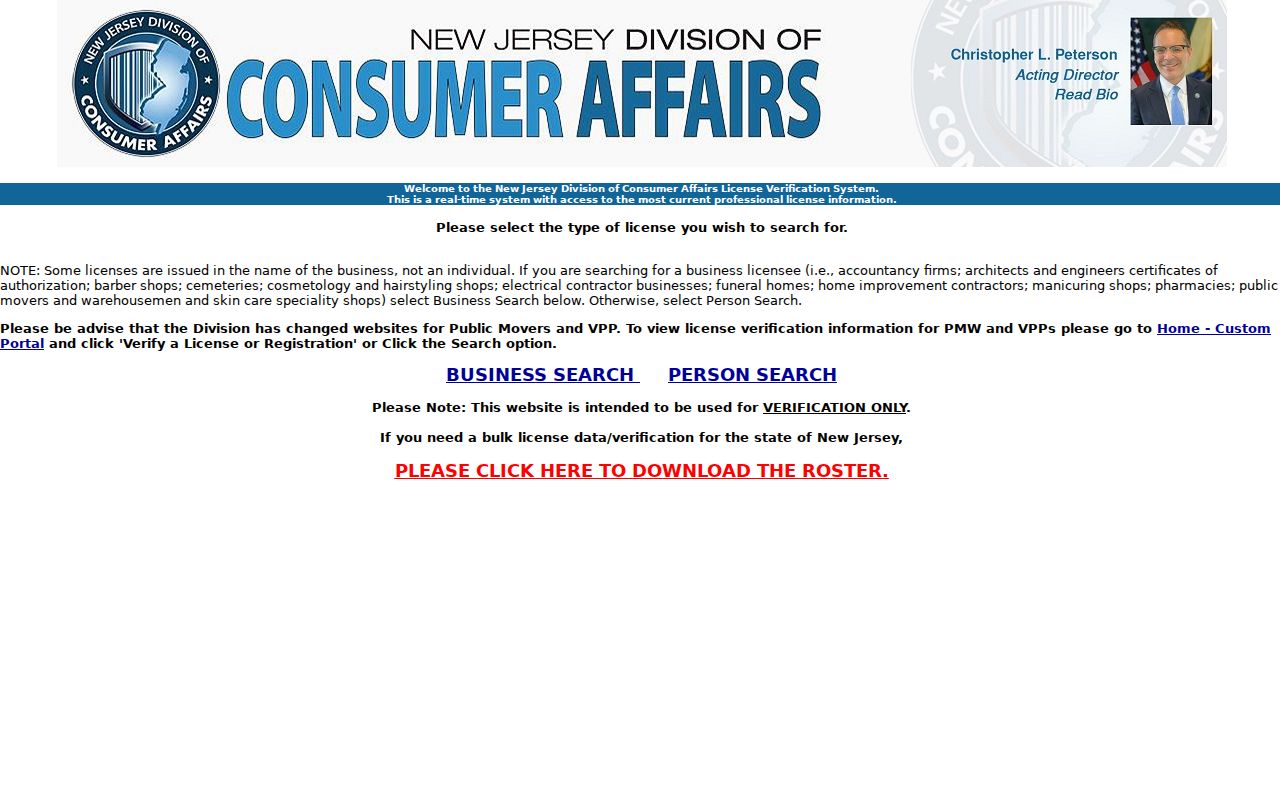
A license result is most useful when its name, number, category, and date agree with another public record.
Note: The best current Bloomfield source is often the narrowest official source that matches the question.
Bloomfield Voter Records Have Clear Limits
New Jersey law describes statewide voter-list fields as name, address, date of birth, party affiliation, and voting history. Signatures are not part of the public list, and a voting-history field does not reveal how a person voted. N.J.S.A. 19:31-18 and 19:31-18.1 also protect covered addresses and regulate copies, price, and permitted use. The accessible voter-status page did not reveal enough live form fields to support a made-up search tutorial.
For a specific match, use the state status route and treat a result as one dated checkpoint. For a statutory list request, ask Essex County for its current format, date, required certification, and permitted-use terms before paying. The research did not locate a verified Essex request form or field layout. That gap is a reason to ask the custodian, not a reason to assume a streetwide list is available in a particular format.
Bloomfield Deed Names Need Date Context
PRESS, the Essex Register’s Property Records Electronic Search System, is the transfer trail behind many parcel results. Search a party as both grantor and grantee, then carry the recording date, document number, book and page, municipality, and legal description to the next source. This helps separate two people with the same name and keeps a deed connected to the correct Bloomfield parcel.
The Register reports deeds and mortgages back to 1637, computerized recording and indexing from December 1988, and remote internet property transactions from May 1, 2001. The PRESS interface itself says records are searchable from October 1, 1996. Those are different milestones, not interchangeable coverage claims. Confirm the needed year with Register staff, especially when an online row has no image. Mortgage cancellations before July 2, 2012 may appear in the index without an electronic image.
Staff in the public room can demonstrate books and indexing but do not perform a title search. A historical record that stops online may require a Hall of Records visit, a book-page request, or a focused records request for an existing county-held item.
Bloomfield Court Names Require Verification
The statewide NJ Courts landing page sends users to separate civil, criminal, judgment-lien, Tax Court, and municipal paths. In the public case-jacket search, party-name mode uses last and first name and permits an optional middle initial. A result can show the party, venue, docket number, caption, and case-initiation date. Opening a docket may show events or filings without making every document image public.
Compare the venue, middle initial, docket, and date before treating a court name as a match to a Bloomfield resident. Juvenile, sealed, expunged, adoption, and other restricted records are not a general public result. For a needed file or certified copy, use the court’s copy process or the relevant clerk rather than assuming the public case jacket contains the whole file.
The state corrections information page routes inquiries to its official custody information system. Its help material defines fields such as aliases, commitment number, county, facility, release date, offense, and sentence, but the live form controls were not rendered during research.
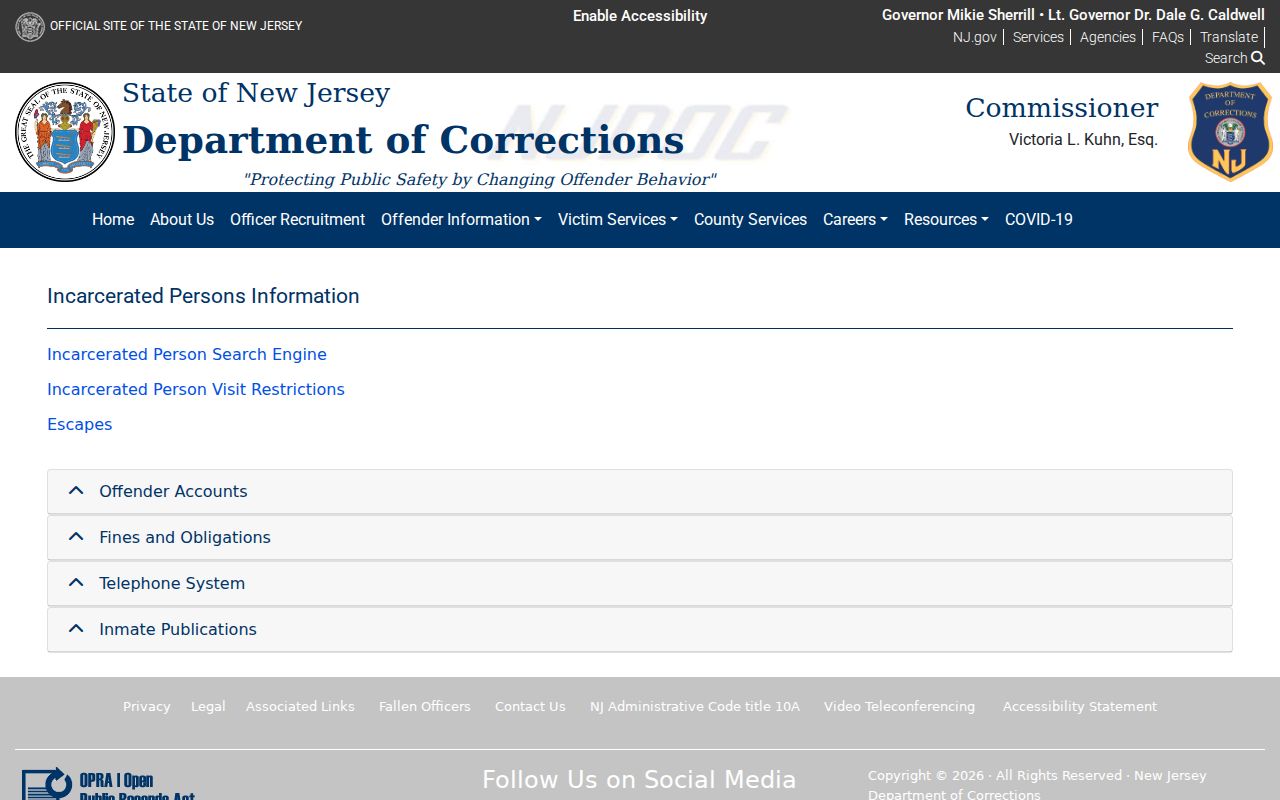
A controlled custody locator is a separate state channel, not a substitute for the Bloomfield resident record trail.
For federal custody questions, the Federal Bureau of Prisons locator supplies number and name modes for federal inmates from 1982 forward, with older records routed to the National Archives.
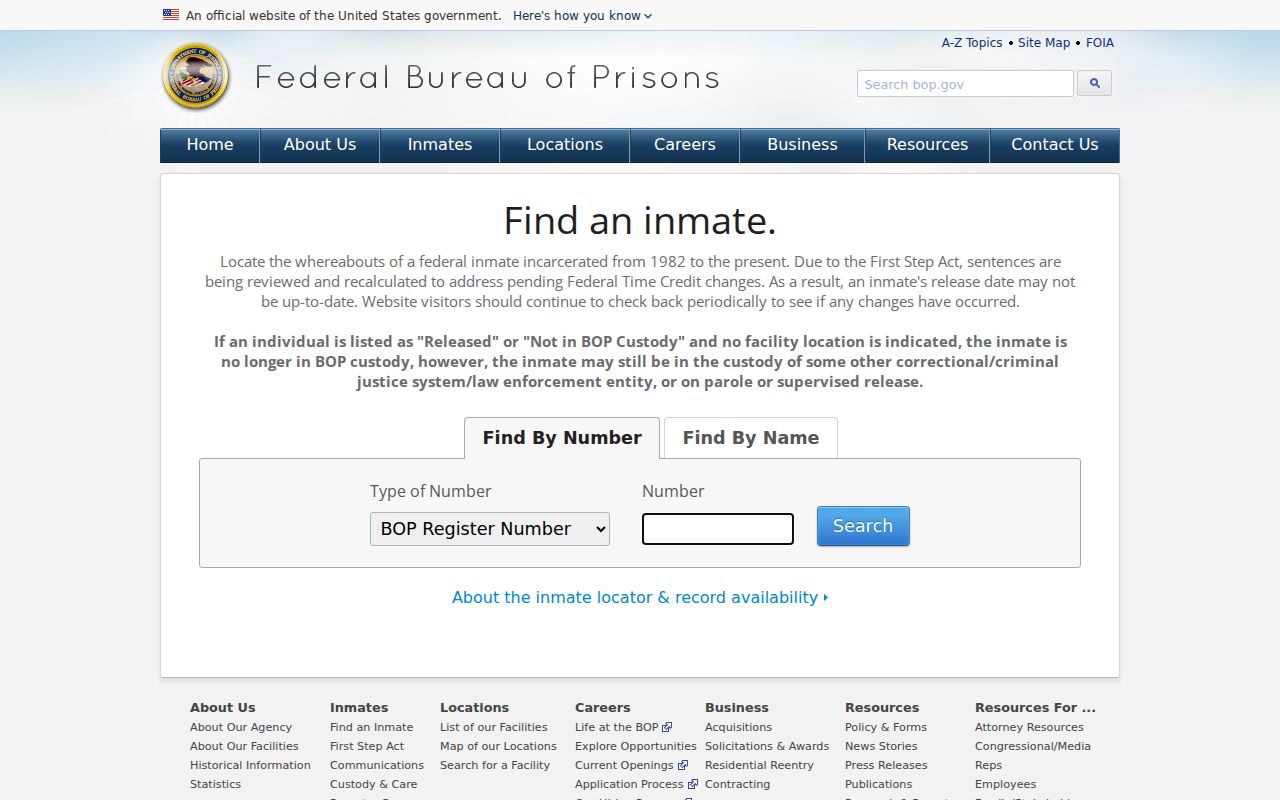
Its result fields can include name, register number, age, release date, and location, but a federal record does not confirm an ordinary Bloomfield address.
Bloomfield Vital Events Stay Restricted
Bloomfield Vital Statistics handles local birth, death, marriage, and civil-union copies for events in the Township. Its local records reach back to 1848. Current vital records are not a public online name database. A certified copy requires the stated identification, fee, and relationship proof. The local request route accepts mail or in-person submissions and asks requesters not to send original identification.
New Jersey’s genealogy periods are different from its current-copy rules. The state describes births older than 80 years through 1925, marriages older than 50 years through 1951, and deaths older than 40 years through 1951 for deceased people as genealogy research categories. The State Archives holds births through 1924 and marriages and deaths through 1950. A requester who does not qualify for a current record needs the state’s authorized route, not a general resident search.
The Bloomfield Vital Statistics page identifies the local registrar and copy routes. Confirm the active desk contact before an in-person visit because two official Township phone numbers appear in the research.
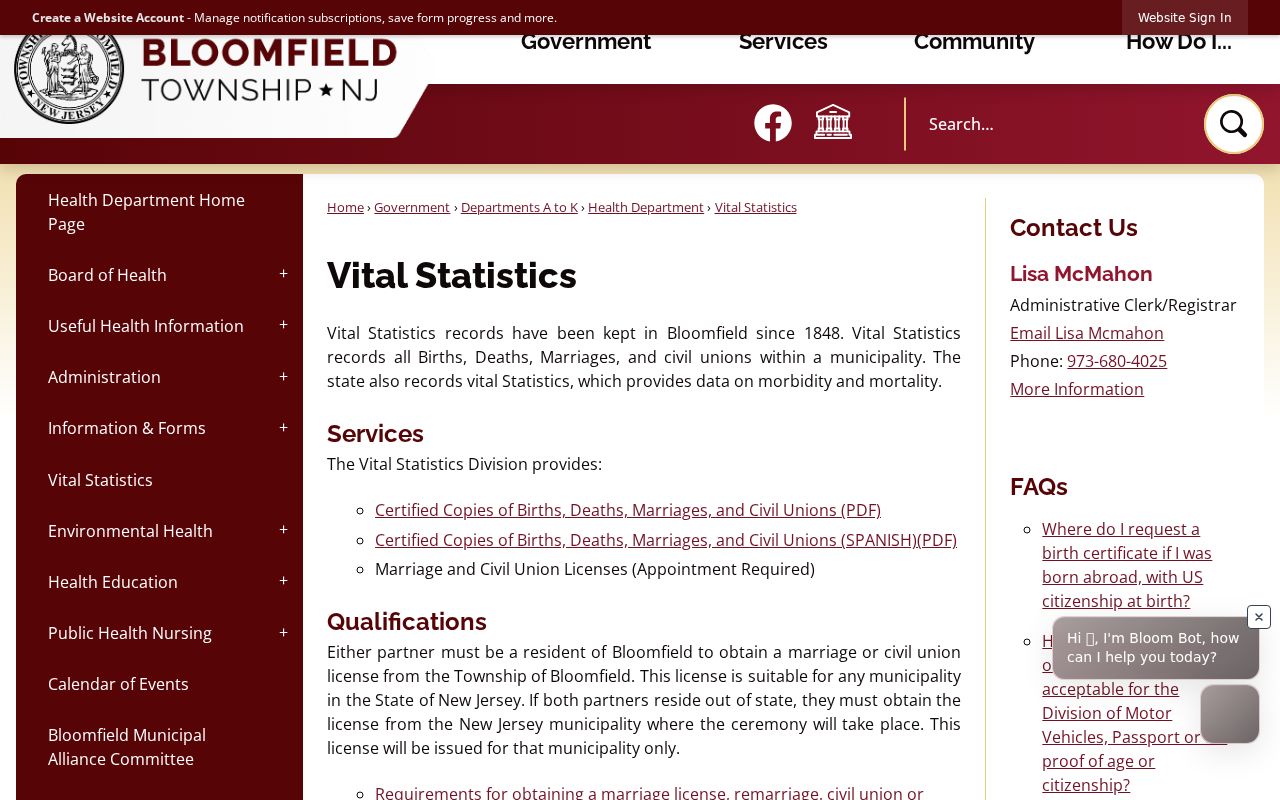
Vital evidence can settle a family-history question when eligibility fits, but it is not a public shortcut for finding living people.
Note: A certificate, index, and informational certification have different access rules and legal uses.
Historical Bloomfield Resident Directories
The Bloomfield Public Library city-directory collection is documented from 1870 through 1970 and is still in process. Much of it is made up of Bloomfield sections within the Orange Directory, held in print and linked to digitized copies through Internet Archive. That publisher context matters. Do not assume each scan is a standalone Bloomfield publication. Search both the alphabetical and street sections when a volume offers them, then read the abbreviation key before expanding a line.
The library also directs researchers to obituary indexes, newspapers, census tools, local archives, and yearbooks. Those sources let a household move through time: a directory supplies an address or occupation line, a census tests household composition on its date, and an obituary or deed can clarify a move or death. The full shelf, entry-reading method, and tracing sequence sit on the Bloomfield city directory page.
Bloomfield’s Nine Early Archive Volumes
Before a portal or printed directory, Bloomfield left a more fragmentary paper trail. The State Archives finding aid identifies nine Bloomfield ledgers and day books from 1812 to 1899, including a financial record book for 1812 to 1845, a ledger for 1871 to 1898, and day books ending in 1899. They are municipal records, not a complete residents directory, yet they can provide a local name, transaction, or date that points research toward a library, deed book, or historical map.
The New Jersey State Archives genealogy entry point is where older collections and county or municipal finding aids begin. Save the collection name, year, and page or image reference alongside any extracted name.
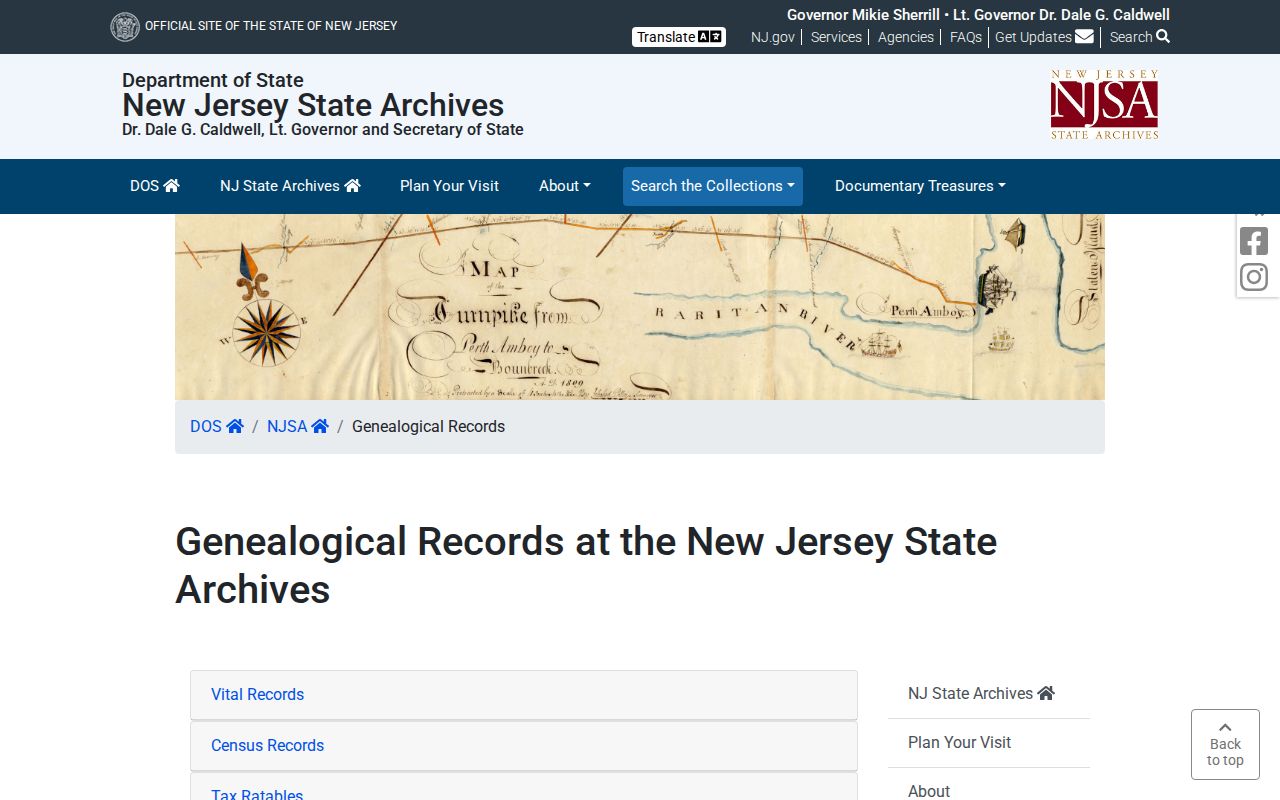
The archival layer works best as evidence for a specific historical question, not as a modern identity tool.
Bloomfield Original Records Versus Compiled Results
Commercially compiled people-search products can combine old addresses, public filings, and data obtained from other sources. Their apparent matches can be stale or can merge unrelated people. Original public sources give a clearer path back to the custodian and the date on which a record was created. The tradeoff is that official channels are narrower and may require a counter visit, a library session, a request form, or eligibility.
| Original-record route | Compiled-data category | Best practice |
|---|---|---|
| PROS, PRESS, court, library, or agency record | Combined profile from multiple sources | Use the original custodian to test a claimed match. |
| Shows a defined record and date | May have uncertain update timing | Record the source date and compare independent evidence. |
| May have access limits or request rules | May charge for a summary | Do not trade convenience for an unsupported conclusion. |
New Jersey also provides a free name and business claim route for unclaimed property. It can be a useful state-held clue in an estate or reconnecting question, but a claim record is not evidence of a current address.
The New Jersey Unclaimed Property search is free to search and claim. Never pay a private party merely to reach the state claim route.
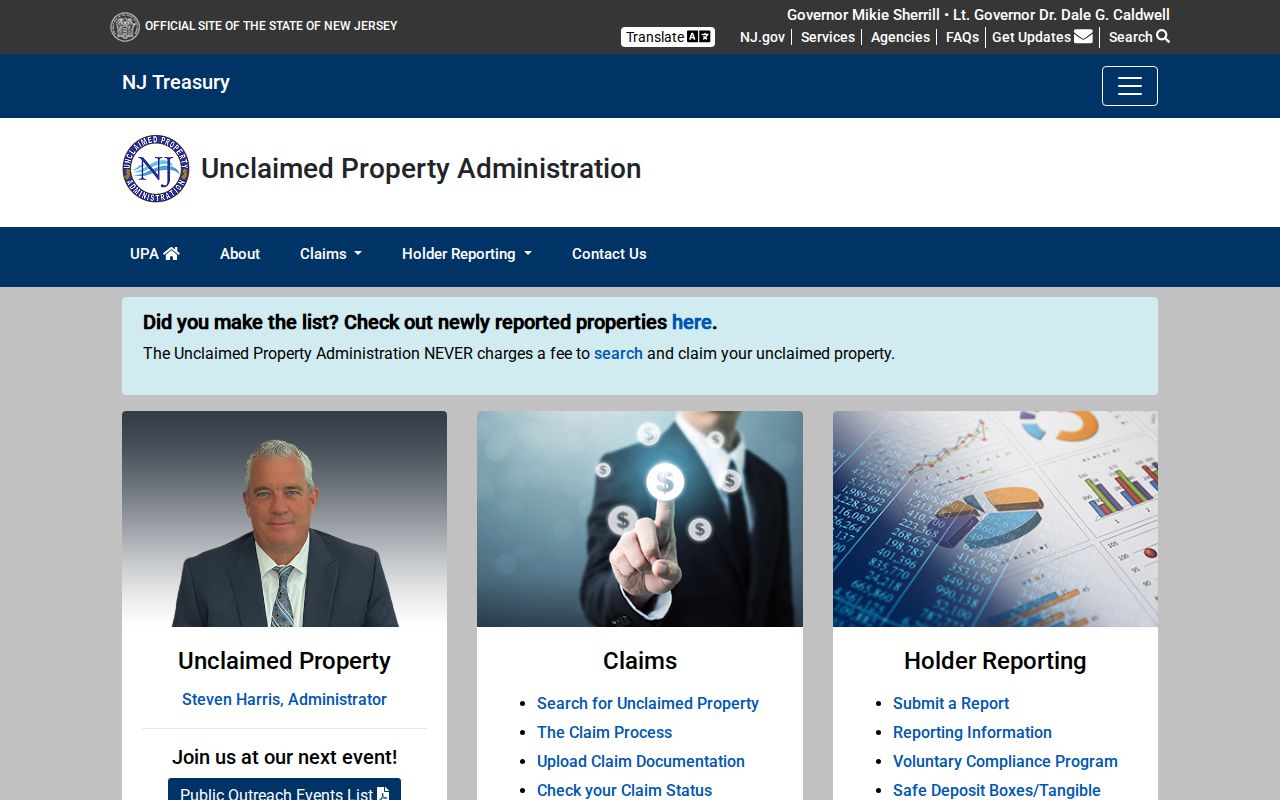
Use a name result to identify a state process, then follow Treasury’s proof requirements directly.
Bloomfield OPRA for Existing Records
When an online route ends, the New Jersey Open Public Records Act, N.J.S.A. 47:1A-1 et seq., is the municipal fallback for an existing record held by the right custodian. It does not require an office to build a new resident report or answer an open-ended research question. A workable request identifies a specific permit log, inspection record, meeting record, or other existing series, along with an exact address and date window where relevant.
The usual response period is seven business days after receipt when a record is available. Standard paper and electronic-copy rules, deposits for larger estimates, redactions, and special-service charges can apply. Bloomfield’s form is written, not a telephone request, and asks for contact details, a record description, medium, delivery method, and required statements. The municipal custodian is separate from the Essex County OPRA contact.
The Bloomfield OPRA request form is the local starting point for Township-held material. Ask the office for its preferred electronic delivery format and estimated cost when the request is likely to involve many pages.
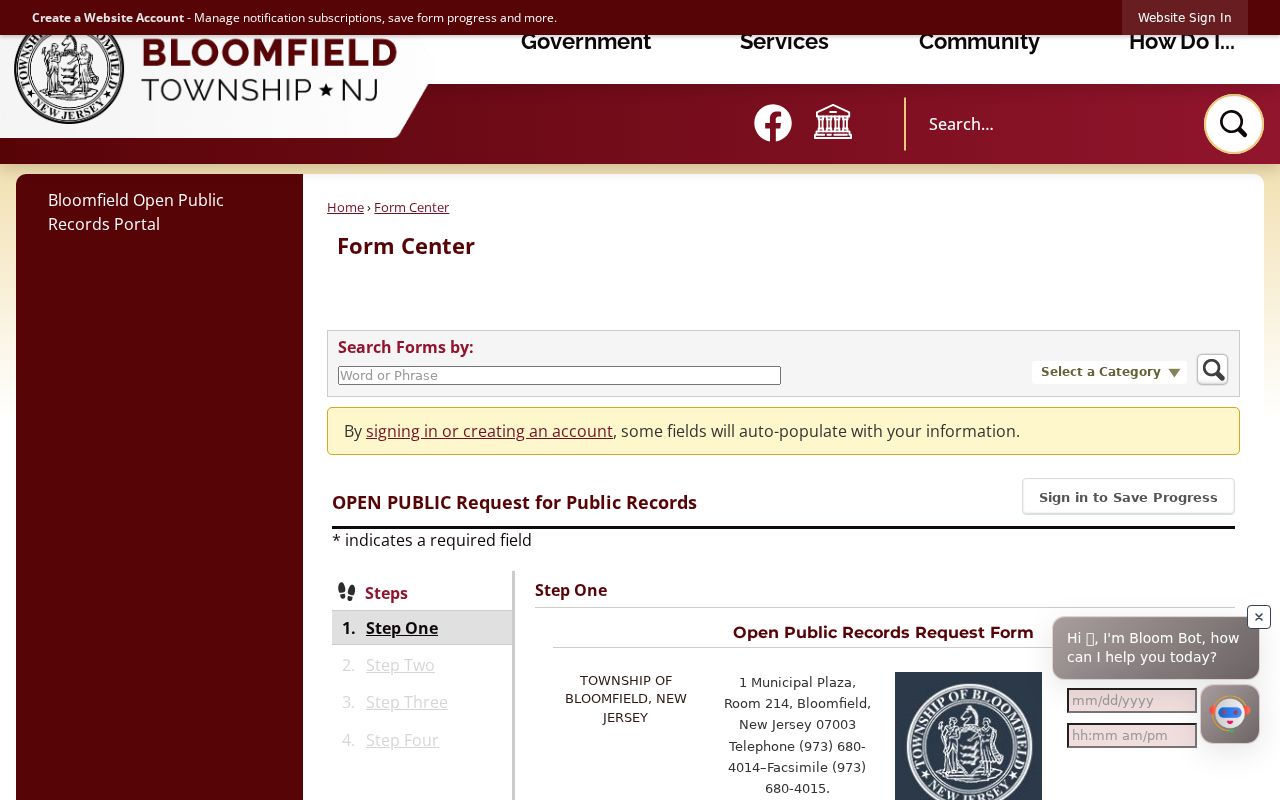
A focused request preserves the distinction between an accessible public record and a private investigation the custodian is not required to perform.
Note: Route every request to the office that actually holds the record, not to a similarly named county or Township desk.